Sat • Sep 26, 2026, 00:32:01 GMT+1

When Income Stays Fixed and Prices Don't

Salaries haven’t changed, but living costs have. See how inflation is affecting public sector borrowers and what lenders may be missing.

avatar

Business, Strategy & Transformation Office

September 25, 2026. 2 mins read
Share Via WhatsApp
Share on X (Twitter)
Share on Telegram
Share on Facebook
Share on mail
Copy link

When Income Stays Fixed and Prices Don't

When Income Stays Fixed and Prices Don't

First-Half 2026 Inflation in Nigeria: Impact on Public Sector Borrowers' Disposable Income

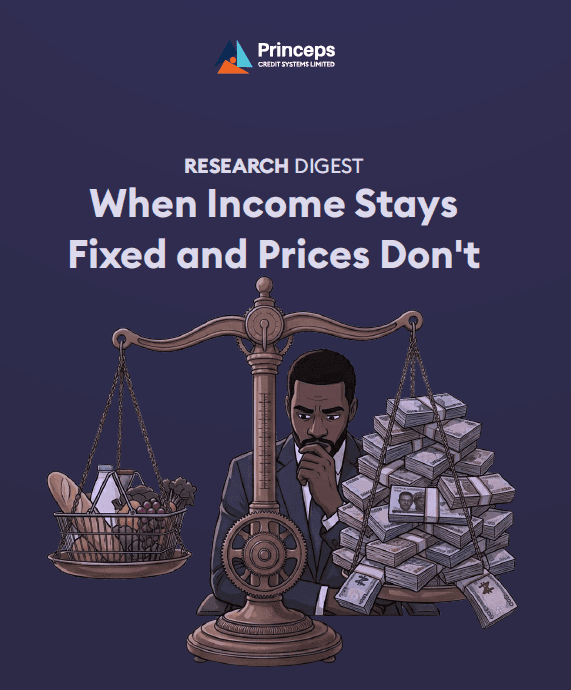
This digest examines what rising prices are doing to public sector borrowers in Nigeria, using minimum wage earners with fixed loan repayments as a case study, and what lenders may be missing as a result.

Inside, readers will find:
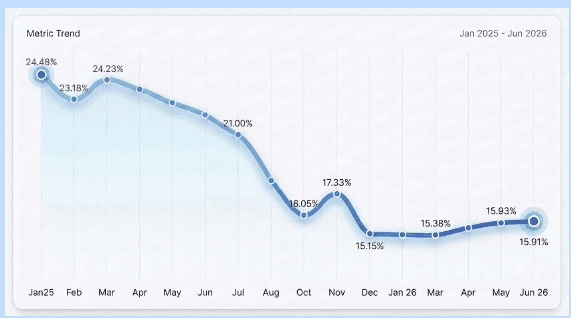
  • The inflation picture: How Nigeria's headline inflation fell steadily through 2025 before stalling in 2026, and why even a pause in rising inflation still hurts borrowers with fixed repayments.
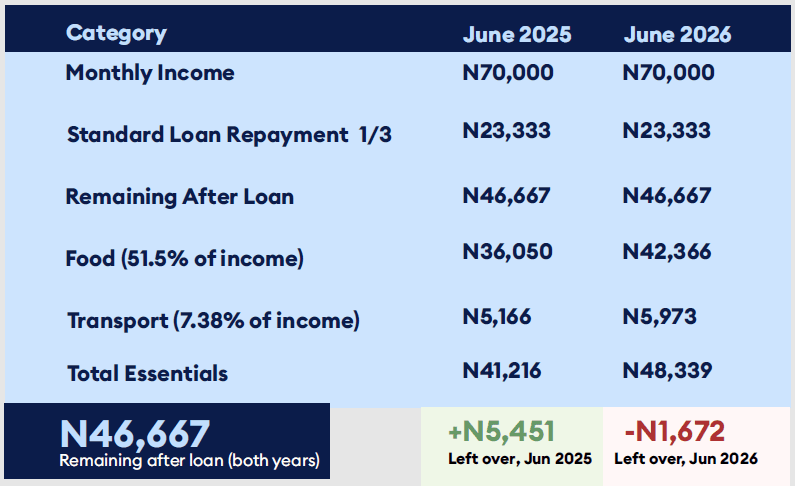
  • The real cost to a ₦70,000 earner: A breakdown of how the standard one-third loan repayment rule leaves a borrower with ₦46,667 to live on, against actual June 2026 food and transport costs of roughly ₦48,339.
  • What's driving the squeeze: The role of fuel prices and food inflation, and why these two daily costs matter more to repayment capacity than annual expenses.
  • A state-by-state view: How inflation varies sharply across Nigeria, from Imo State's 19.47% to Niger State's 42.23%, and why two borrowers with identical salaries can face very different financial pressure depending on where they live.
  • A practical tool for lenders: A "cost-pressure check" that layers food and transport inflation on top of the standard one-third rule, offering an early warning signal before a loan shows signs of default.
  • Guidance for borrowers: Practical steps for working out a realistic repayment buffer and acting early if repayment becomes difficult.

The core takeaway: salaries haven't changed, but the cost of living has, and that gap, not the borrower's income alone, is what increasingly determines whether a loan gets repaid.

Get this resource for free

Salaries haven’t changed, but living costs have. See how inflation is affecting public sector borrowers and what lenders may be missing.

Stay up to date with everything Princeps

Get all these directly to your inbox.

Notification illustration

Leave a comment

By posting on this blog, I agree to follow the community guidelines and keep discussions respectful.

ongoing conversations

No comments

No comments yet

Be the first to share your thoughts on this article.

Read other articles

REGULATIONS SHAPING  DIGITAL CONSUMER LENDING  IN NIGERIA IN 2026

Regulations . May 01, 2026

REGULATIONS SHAPING DIGITAL CONSUMER LENDING IN NIGERIA IN 2026

Nigeria's 2026 digital lending is shaped by Open Banking, FCCPC DEON & NDPA GAID. Get the full breakdown, timelines, and what they mean for lenders

Business, Strategy & Transformation Office

Get in touch

Have an enquiry or want to learn more
about our services?

Let's chat; Kindly fill out this form and we will respond in less than 24 hours.

+234
Peter Atuma, Executive Chairman at Princeps speaking at a company event

Great Team; Great Company

Our core values as a company reflects beyond just us doing business; Excellence, integrity, humility, professionalism, trust and empathy is in the gene of every Princeps Star!


Princeps Credit Systems Certified as a great place to work
Making dreams happen todayMaking dreams happen todayMaking dreams happen todayMaking dreams happen todayMaking dreams happen todayMaking dreams happen todayMaking dreams happen todayMaking dreams happen todayMaking dreams happen todayMaking dreams happen today